The Sarangi

The Instrument with a Hundred Voices

No-one is quite sure what the sarangi’s name is meant to mean. Some argue that it comes from the Persian for ‘three strings’, while others claim that it means ‘a hundred colours’, a reference to its incredible musical range. Whatever it means, one cannot deny that that very name is now synonymous with Pakistani classical music, despite the instrument’s starting out as a simple folk instrument, very much like the humble ektara.

The sarangi first achieved fame in the Mughal era, when classical music was flourishing due to the patronage of the Mughals. Even though no-one is not quite sure of when exactly this happened, we do know that the sarangi soon became a staple of classical music performances, filling in the very role the violin filled in Western classical music.

However, the sarangi’s popularity began to fade soon after the arrival of the harmonium. This new arrival was both easier to learn and play, leading to the sarangi’s being neglected in its favour, even though the harmonium cannot render the ‘meend’ (slide between notes) which is so essential to classical music, unlike the sarangi. Although we at Save the Sitar recognize the harmonium as an incredibly versatile and convenient instrument, we firmly believe that it should not take the sarangi’s rightful place. It is urgently required that the sarangi be preserved in Pakistan so that generations to come may enjoy and appreciate it.

Picture courtesy Wikimedia Commons


Save the Sitar is a website dedicated to promoting and preserving Pakistan’s classical music. Join our growing community to help further our cause!

Follow Save the Sitar!

Get new content delivered directly to your inbox.

We’re on social media!

From the Archives of Ali Ayub

A Treasure Trove Lost for a Decade

Hello dear reader! Or better still, dear researcher! Save the Sitar is proud to bring to you the field work of Ali Ayub, a former student at NCA whose graduation dissertation explored the major sitar gharanas found in Pakistan. In 2007 he set off on a journey across the country to interview prominent sitarists and document the diversity of their styles and the details of their family histories. The resultant 9 hours of tapes have no parallel on this side of the Indo-Pak border, so immerse yourself in this in depth musical journey!


Special thanks to Madam Sarah Zaman for guiding and supporting us throughout this project. Ali Ayub would like to remember the late Riaz Ahmad Barni for his kindness and thank his videographer Vishal Rajput.

If you are a researcher interested in using this work, have questions or language difficulties, please don’t hesitate to reach out to us in the comments, via email at savethesitar@gmail.com or through our various social media pages.

Creative Commons License
All video media on this page is licensed under a Creative Commons Attribution-ShareAlike 4.0 International License.

An Interview With Shahid Khan and a Visit to Radio Pakistan, Hyderabad
Sitarist Shahid Khan, son of Abid Khan, performs Raag Aiman and discusses his family. He and Ali Ayub then visit Hyderabad’s Radio Pakistan Office.
An Interview with Ustad Nafees Khan on the Current State of Classical Music
Ustad Nafees Khan discusses the lack of patronage and the pathetic conditions of classical musicians nowadays, as well as the effects of governmental organizations like Pakistan Radio.
An Interview with Sajid Khan and some Performances by his Family
Sitarist Sajid Khan is interviewed at his home in Karachi and plays Raag Aiman. His son Shahroze Khan and other family members join the performance. Has audio issues.
A Performance by and a Discussion with Ustad Abid Hussain Khan
Ustad Abid Hussain Khan plays the sitar, describes his family tree and discusses how he gave up the sitar. His son, Shahid Khan, performs as well. In the second half of the video, Farhan Khan talks about the electric sitar, with Rais Khan and his wife contributing too. Ends at 1:01:41.
A Visit to the Karachi Arts’ Council and Ustad Imdad Khan’s House
Ali Ayub first goes to the Karachi Arts’ Council to get recordings of Ustad Nafees Khan’s performances. He then visits Ustad Imdad Khan’s house, where they discuss his life. His maternal nephew Turab Khan also demonstrates his gharana’s playing style with a short performance.
Various Interviews of Sitarists
Ali Ayub interviews an amateur sitarist at NAPA, who describes how he started playing. We then follow noted sitarist Abid Hussain Khan as he sells kulfis on the streets of Hyderabad, illustrating the current state of many sitar players. Lastly, Ustad Rais Khan highlights many of the current problems that musicians face.
Some Performances by Sajid Khan and a Display of his Family Tree and Various Other Heirlooms
Sajid Khan performs several times on the sitar, at times accompanied by his family, and then shows old letters and pictures as well as his family tree to Ali Ayub.
A Discussion on Classical Music in Hyderabad
Zulfiqar Ali discusses his family and classical music in Hyderabad. We also get to see old records, as well as some familial heirlooms like pictures.
Two Interviews with Zafar Ali and Sajid Khan
Zafar Ali demonstrates how a sitar is made and maintained. The sitarist Sajid Khan is then interviewed at the Karachi PNCA, where he is asked about his family tree and playing style.
A Lesson with Ustad Nafees Khan and an Interview with Zafar Ali
In the first half of this video, Ustad Nafees Khan is shown teaching his students at NAPA how to make paltas, which are variations on a raag. The video cuts to a rooftop performance by NAPA students in the presence of Ustad Nafees Khan. In the second half, Mr. Ali Ayub interviews NAPA’s instrument maker, Zafar Ali, who talks about his family and their tradition of instrument-making. He then goes into greater detail about his work, showing how a sitar is made.
A Lesson and an Interview with Ustad Nafees Khan
Ustad Nafees Khan from the Kapurthala gharana teaches his student Harris about how to develop an alaap. He then discusses his family history with Mr. Ali Ayub, mentioning different sitar-playing families in Lahore and taking the names of his father’s disciples. He also demonstrates a maseet-khani gat.
A performance by Sajid Khan and Ali Ayub
In this short video, the sitarist Sajid Khan, son of Habib Khan from the Senia gharana, performs at the PNCA in Karachi (accompanied by Ali Ayub, who had never properly played the tabla before!). Then they discuss the performance and classical music in general.
A Conversation with Zulfiqar Ali
Ali Ayub travels to Hyderabad from Lahore to meet with Zulfiqar Ali to discuss various matters relating to music. No audio is available.

Save the Sitar is a website dedicated to promoting and preserving Pakistan’s classical music. Join our growing community to help further our cause!

Follow Save the Sitar!

Get new content delivered directly to your inbox.

We’re on social media!

The Ektara

A One-Stringed Wonder

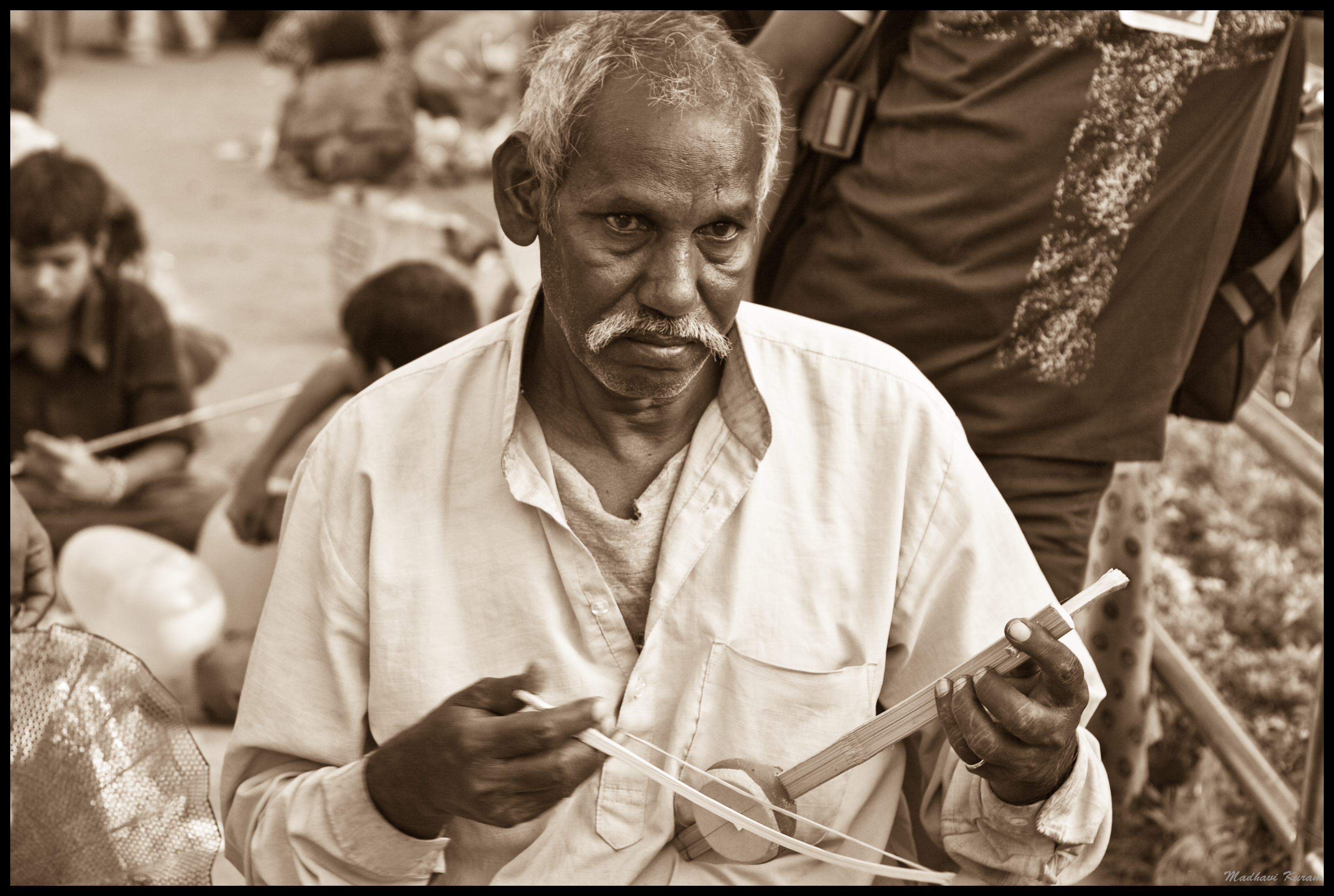
Hmm, well, it has a rather curious name, to be sure. Most instruments have names whose etymologies are extremely hard to trace, leading to a delightful (well, only for those who are interested in such things) research spree as one races from one obscure source to the other. The ektara, on the other hand, has a rather suspiscously straightforward name (ek in Urdu means one, while tara means string, so it literally means one string). But surely no-one could play an instrument with only one string, one might believe. Well, this instrument can actually be found in a wide variety of incarnations all across the Subcontinent, from the Bengali zither used widely by the Bauls of Bengal to the bowed variant shown above. It has long had been used typically in rather rural or isolated areas, as more sophisticated instruments, like the hundred-stringed surmandal, are found in the city.

The ektara is played through varying the pressure on its only string so as to create a melody, while the musician also uses a bow, much like a violinist or sarangi player. However, unlike the violin or the sarangi, the notes produced all depend upon one string, requiring, at least in our opinion, a great deal more of skill (in this matter at least) on the part of the musician. Most violinists are also forced to vary the pressure on the strings like this, but to a much lesser degree due to their greater choice of strings. This folk instrument really has to be seen to be believed, so how about you check it out here!


Save the Sitar is a website dedicated to promoting and preserving Pakistan’s classical music. Join our growing community to help further our cause!

Follow Save the Sitar!

Get new content delivered directly to your inbox.
We’re on social media!

The Song of the Surmandal

An Interview With Niaz Khan

Niaz Khan is certainly a well-travelled, multi-talented and multi-lingual individual. He has been to many countries around the world, from Russia to India, can sing in many languages, play the surmandal and makes a variety of instruments, from the druza to the harmonium. A man of many talents, as we said before, and certainly one with an interesting backstory.

Born to an electrician, Mr. Khan grew up in the province of Khyber Pakhtunkhawa. Niaz Khan’s family, was not at all happy when they learned that he was planning to take up music professionally, but they eventually came around to it. Interestingly, his father himself used to play the flute in his spare time. Even as a child, he had a wonderful singing voice which led to his appearing on various shows for children such as Storay (which means stars in Pushto) and led to his being selected as a student of the legendary Bade Fateh Ali Khan at the age of eight. However, he emphasizes that he was not taught by only one teacher but by many, the full list of which can be found in his biography.

 He was in fact introduced to his instrument of choice thanks to Bade Fateh Ali Khan, in whose house he discovered his first surmandal, badly broken. The great singer’s family warned him against even touching it, saying that his teacher would be angry. Despite their protests, he started to play a little on the instrument, upon which he found his teacher staring at him. However, instead of scolding him, he sat him down and began to teach him the fundamentals of the surmandal. Kind of like the teacher you would love to have, right?

He in fact taught himself how to make the surmandal, which launched him into the world of instrument-making. Even though he is not an instrument-maker by profession, he proudly tells us that he can make about eleven instruments to some degree.

He speaks positively of modern technology, saying that it has helped him find many new and eager students who are ready to learn music. It also supports his endeavor, the Khushal Music School, which is an academy which teaches singing, playing music and making instruments to its students.


Save the Sitar is a website dedicated to promoting and preserving Pakistan’s classical music. Join our growing community to help further our cause!

Follow Save the Sitar!

Get new content delivered directly to your inbox.

We’re on social media!

Zohaib Hassan

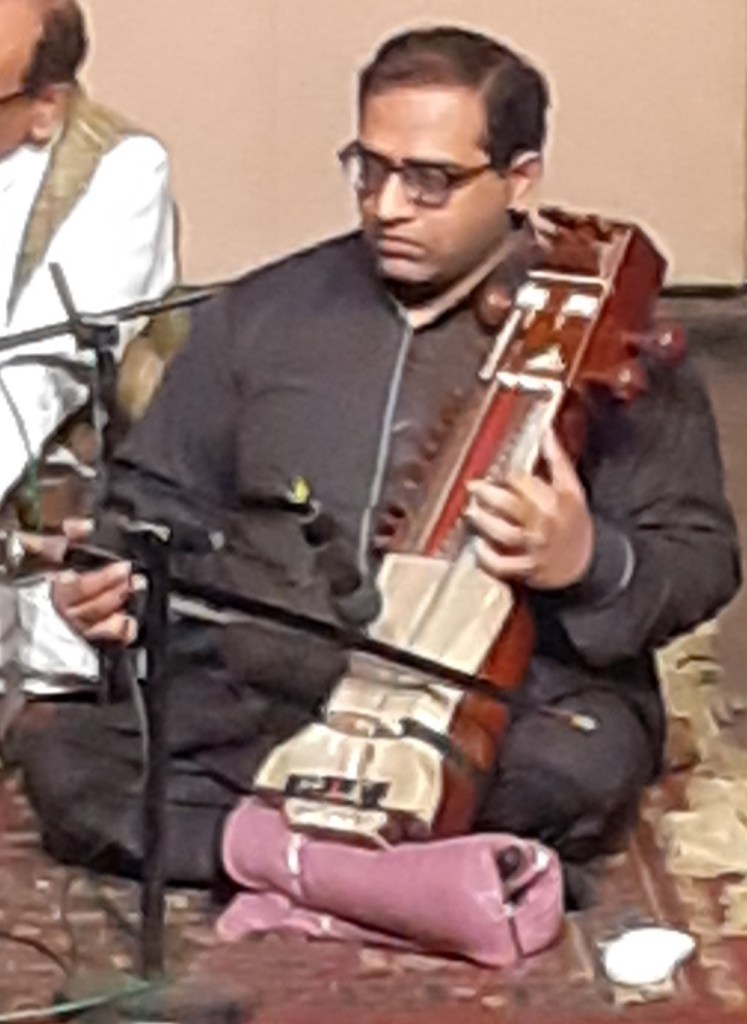
Zohaib Hassan Khan (b.1987) is a sarangi-player who associates himself with the Amritsari gharana. He learnt how to play the sarangi from his uncle, Ustad Bakhtawar Hussain Khan Sahib, as his whole family played the sarangi. His ancestors included the noted Ustad Hussain Bakhsh Khan Sahib, Ustad Peeru Khan Sahib, Ustad Nathu Khan Sahib and Ustad Abdul Mir Khan Sahib. In 2003-2005, he started to play the sarangi while doing his matriculation, but he could not pursue higher education due to financial constraints. He soon began to play the sarangi professionally, and started to play for Radio Pakistan in 2008. He has worked with many Pakistani music directors and musicians since then, and is currently attempting to teach another generation of sarangi-players through the Lahore Sarangi School and a series of video tutorials


Save the Sitar is a website dedicated to promoting and preserving Pakistan’s classical music. Join our growing community to help further our cause!

Follow Save the Sitar!

Get new content delivered directly to your inbox.
We’re on social media!