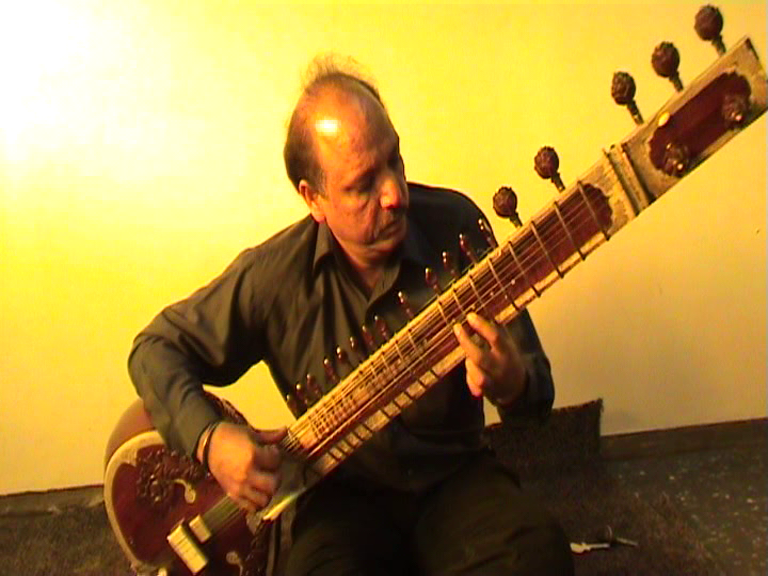
As soon as the performance ends, the whole hall erupts into applause. The great yet deaf master has his eyes closed as if in a trance. He finally opens his eyes to feast on the energy of his rapturous audience. This great master is not Beethoven, but Ustad Fateh Ali Khan, the finest exponent of the Kapurthala tradition of sitar playing.
The Kapurthala gharana traces its history back to the 18th century, to a veena player named Mir Nasir Ahmed, who migrated from Delhi to Kapurthala in 1858. His two sons, Mir Kallan and Mir Rehmat Ali, went on to become distinguished veena and sursingar players, with Mir Rehmat Ali even learning the sursingar from a (supposedly) direct descendant of Tansen. According to legend, Mir Rehmat Ali became such an accomplished and well-esteemed musician that the Mughal Emperor himself gave a surbahar to him as a sign of respect! This surbahar is said to have then been handed on to Bhai Mehboob Ali, Mir Rehmat Ali’s disciple, and one of the rababi sitar players of Kapurthala.
The Kapurthala rababis, have always been closely affiliated with the rulers of this small Punjabi princely state. The rababis are a group of musicians primarily known for their association with Sikh religious music, with the group being named for its historical association with the rabab, a common folk instrument. Most of its members settled in Lahore after Partition, where they started working in the film and radio industries.

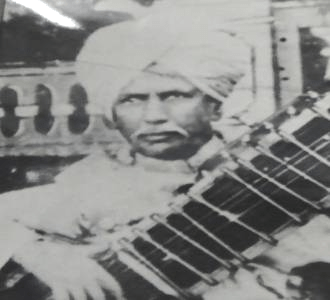
In Pakistan, Ustad Fateh Ali Khan, Bhai Mehboob Ali’s nephew, used to be the main exponent of this tradition until his death in 1981, upon which he was succeeded by his son, Ustad Nafees Ahmed Khan. He was the disciple of his uncle, Bhai Mehboob Ali, but later on moved to Lahore instead of stay in Patiala, where he was born. Here he started to work as a composer and instrumentalist for the film industry, and composed music for many films.
He was greatly praised for his skill, but chose to move on from the film industry in 1960, when he moved to Rawalpindi, and started to work as a staff artist at Radio Pakistan Islamabad. During his career, he toured India and Turkey, and in 1978, he was awarded the Pride of Performance.
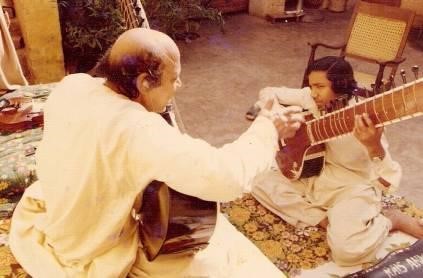
The Playing Style
The Kapurthala Rababi tradition heavily relies on the bold, rather aggressive Purab baj, which is greatly inspired by the pakhawaj. They also use two mizrabs while playing, unlike the other sitar players, and Ustad Nafees Khan himself tends to elaborate more on the basic gat as compared to his father, Ustad Fateh Ali Khan. We can thus see influences from both the rababis and Mir Nasir Ahmed’s sons in their playing style, which you can listen to below.
The Kapurthala gharana in the twenty-first century
Exponents of the Kapurthala gharana in Pakistan, because of its close links with Sikhism, has been a bit reluctant to own up to its multi-religious tradition. However, the Kapurthala gharana lives on with the greatly esteemed Ustad Nafees Khan. He is a faculty member at the National Academy of Performing Arts (NAPA) in Karachi. Ustad Nafees Khan not only steadfastly protects the centuries old Kapurthala knowledge base but has also incorporated his own unique innovations into this great tradition.
Save the Sitar is a website dedicated to promoting and preserving Pakistan’s classical music. Join our growing community to help further our cause!
Follow Save the Sitar!
Get new content delivered directly to your inbox.
 Save the Sitar
Excellent attempt to save the sitar.ie the ancient and melodious traditional music of this sb _ continent.
LikeLike